VIDEO CENTER
Hidradenitis Suppurativa
Hidradenitis suppurativa (HS) is an inflammatory skin condition characterized by painful cysts and bumps that can flare from various triggers.

When it comes to hidradenitis suppurativa (HS), a chronic condition marked by painful lumps under the skin, it’s more than just clogged pores.
HS is caused by inflammation of the sweat glands, which blocks and inflames the hair follicles, says Erum Ilyas, MD, Dermatologist at Montgomery Dermatology in Pennsylvania. This creates tender, painful lumps and nodules under the skin.
“There's a lot of inflammation under the skin that can be very uncomfortable,” Ilyas explains.
When a person develops HS, the hair follicle is blocked and inflamed by a protein called keratin. The follicle swells and fills up with fluid and forms a tender, painful nodule.
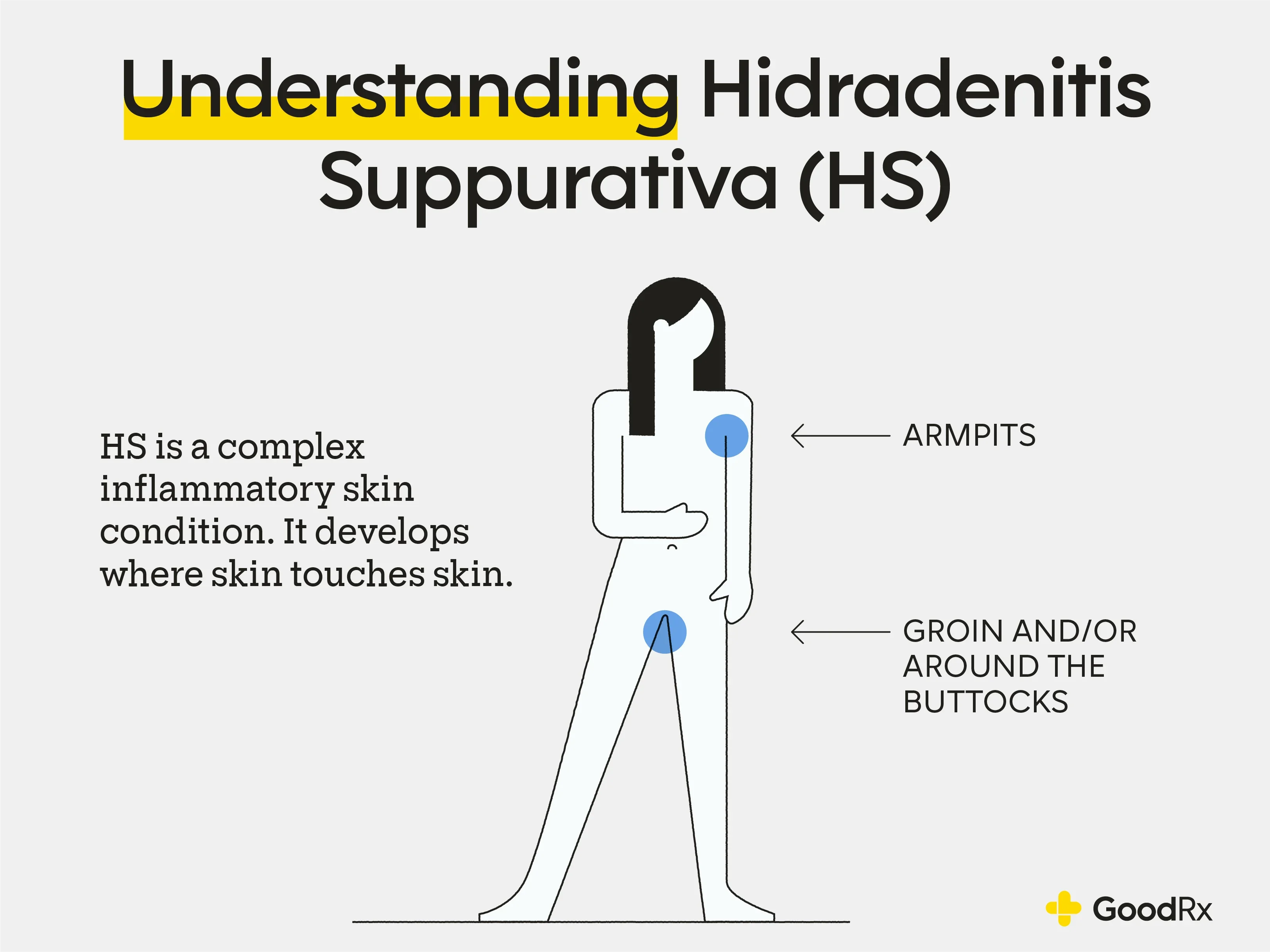
Sometimes pus may start to drain from the surface of the skin, creating a painful sore. These sores can give off a foul odor, and can also make it difficult to move. That’s because the sores usually arise in areas where the skin folds, such as in or under the:
Armpits
Buttocks
Breasts
Inner thighs
Groin
“They can actually affect your mobility or movement, because they’re in those areas of the skin where the skin folds together,” she says.
The exact cause of HS is unknown, but researchers have noticed a few factors.
HS usually starts after puberty or during young adulthood, and symptoms may change based on menstrual cycles, pregnancy, and menopause. For this reason, hormones are believed to play a role.
HS also tends to run in families, so there may be a genetic component. It’s more common in women, people who smoke cigarettes, and people who are overweight or have psoriasis. HS also more commonly occurs in Black, Hispanic, or biracial people, compared to white people.
The good news is that HS is not contagious. Rather, it’s an inflammatory reaction to the presence of bacteria in the skin, according to Ilyas.
“There's not a one size fits all approach to HS,” she adds. “Knowing that we have so many great tools at our disposal is the most important thing to remember.”
This information is for informational purposes only and is not meant to be a substitute for professional medical advice, diagnosis or treatment. GoodRx is not offering advice, recommending or endorsing any specific prescription drug, pharmacy or other information on the site. GoodRx provides no warranty for any information. Please seek medical advice before starting, changing or terminating any medical treatment.
Prescription savings
Stop paying too much for your prescriptions. Compare prices, get pharmacy coupons, and save up to 80%.Resources
About GoodRx
 Find expert answers to your health questions so you can make the best decisions for yourself and your family.
Health conditions
Medications & treatment
Access & affordability
Well-being
Medication discounts


