VIDEO CENTER
Hidradenitis Suppurativa
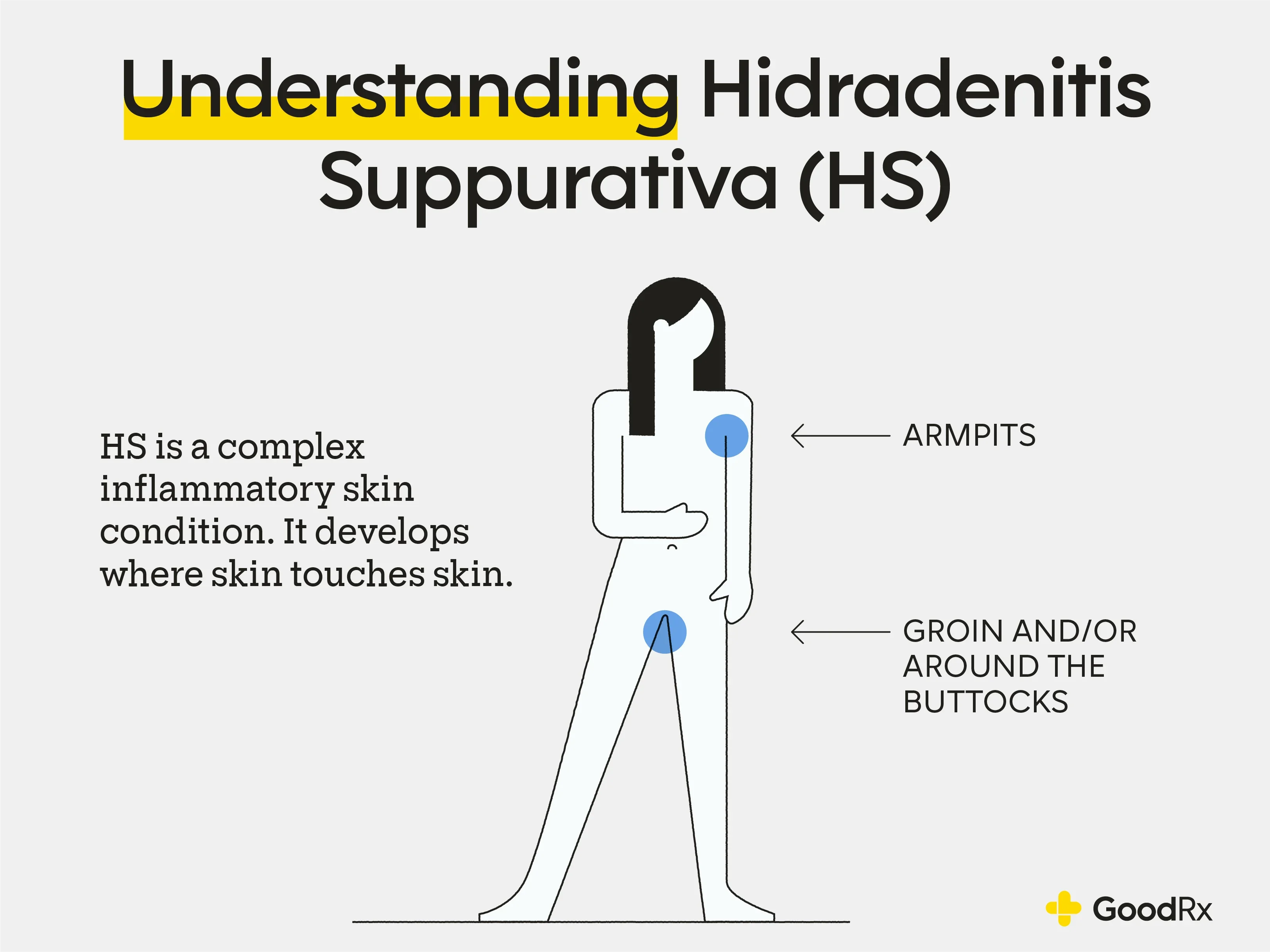
Hidradenitis suppurativa (HS) is an inflammatory skin condition characterized by painful cysts and bumps that can flare from various triggers.

Pimples and cysts plague most people at some point in their lives, so it’s easy to shrug off your bumpy skin as the acne curse. However, if you’re faced with severe skin problems that seem like more than a stubborn zit, you may not realize that what you might think is a just bad case of garden-variety acne (acne vulgaris) is actually a less well-known form called hidradenitis suppurativa (acne inversa).
“Hidradenitis suppurativa is an inflammatory condition that sometimes may resemble acne,” says Hirshel Kahn, MD, a dermatologist at The Mount Sinai Hospital. “They are both conditions of hair follicles getting clogged up by cells and [oil] which comes off the surface of the skin.”
Both conditions are are triggered during puberty and hormone fluctuations, and tend to be more common in women. Here’s how to find out if it’s HS or acne.
1. Location, location, location
While there are some regions on the body that HS and acne share, like the chest and buttocks, most of the time HS lesions appear in places that everyday acne does not. HS is more likely than other kinds of acne to develop in creases of the body: the armpits, groin, breast, and thighs, according to the American Academy of Dermatology. And as you’re probably well aware, acne most commonly pops up on the face, back, neck, shoulders, and upper arms.
2. Severity and pain
Acne can be painful (especially when your skin is irritated from rubbing or picking), but it’s usually not as severe as pain from HS. The pimple-like bumps in HS can grow very deep into the skin, and the pain can be debilitating and significantly affect a patient’s quality of life.
On a 0-10 pain scale, patients with HS typically rated their pain in the range 4–10 and described it as burning, stretching, splitting, throbbing, and aching, according to a 2014 study in Postgraduate Medical Journal.
3. Pus problems
Besides a little white pus if you squeeze a whitehead (don’t do it!), most acne doesn’t typically involve significant leakage. (Psst… Here’s why you shouldn’t squeeze a pimple.)
HS lesions, on the other hand, often leak a bloody or foul-smelling pus that can stain clothing — without your even squeezing or irritating the bumps.
If you notice new developments on your skin — whether you think it’s acne, HS, or something else — it’s important to have a dermatologist evaluate it. A dermatologist’s trained eye can notice the subtle but obvious differences between acne, HS, or other skin conditions.
And this distinction matters: HS is treated differently than acne. Your dermotologist may prescribe antibiotics, steroid shots, or biologic drugs for severe cases of HS, according to Dr. Kahn. Treatment for HS is important and should be done as early as possible to prevent it from worsening and leaving permanent scars.
This information is for informational purposes only and is not meant to be a substitute for professional medical advice, diagnosis or treatment. GoodRx is not offering advice, recommending or endorsing any specific prescription drug, pharmacy or other information on the site. GoodRx provides no warranty for any information. Please seek medical advice before starting, changing or terminating any medical treatment.
Prescription savings
Stop paying too much for your prescriptions. Compare prices, get pharmacy coupons, and save up to 80%.Resources
About GoodRx
 Find expert answers to your health questions so you can make the best decisions for yourself and your family.
Health conditions
Medications & treatment
Access & affordability
Well-being
Medication discounts


