VIDEO CENTER
Hidradenitis Suppurativa
Hidradenitis suppurativa (HS) is an inflammatory skin condition characterized by painful cysts and bumps that can flare from various triggers.

Hidradenitis suppurativa (HS), a chronic skin condition that’s caused by inflammation in the hair follicles, often gets confused with other skin conditions that involve bumps, redness, and pain.
“So much of it has to do with the lack of a general understanding of what HS actually is,” says Erum Ilyas, MD, Dermatologist at Montgomery Dermatology in Pennsylvania.
HS forms when hair follicles become inflamed and blocked, Ilyas explains. This creates painful nodules, or lesions.
“Once that happens, [the nodules] gradually expand, and that’s what contributes to the painful tenderness that’s associated with them,” she says.
Here are some symptoms of HS lesions:
Inflamed and swollen
Painful and tender
Filled with fluid
Foul-smelling drainage
Multiple nodules form a tract under the skin
As the follicles fill with fluid, they start to drain to the surface of the skin, emitting a foul odor. Sometimes HS nodules can merge together and become a tract under the skin, almost like a cord.
When HS becomes severe, lesions may look like large blackheads. They often create scars on the skin once the sores heal.
The location of HS lesions and scars on skin folds can make movement difficult due to the pain. “They are very tender, very uncomfortable,” Ilyas says. “Getting through the day, a workday, can be really hard,” Ilyas explains.
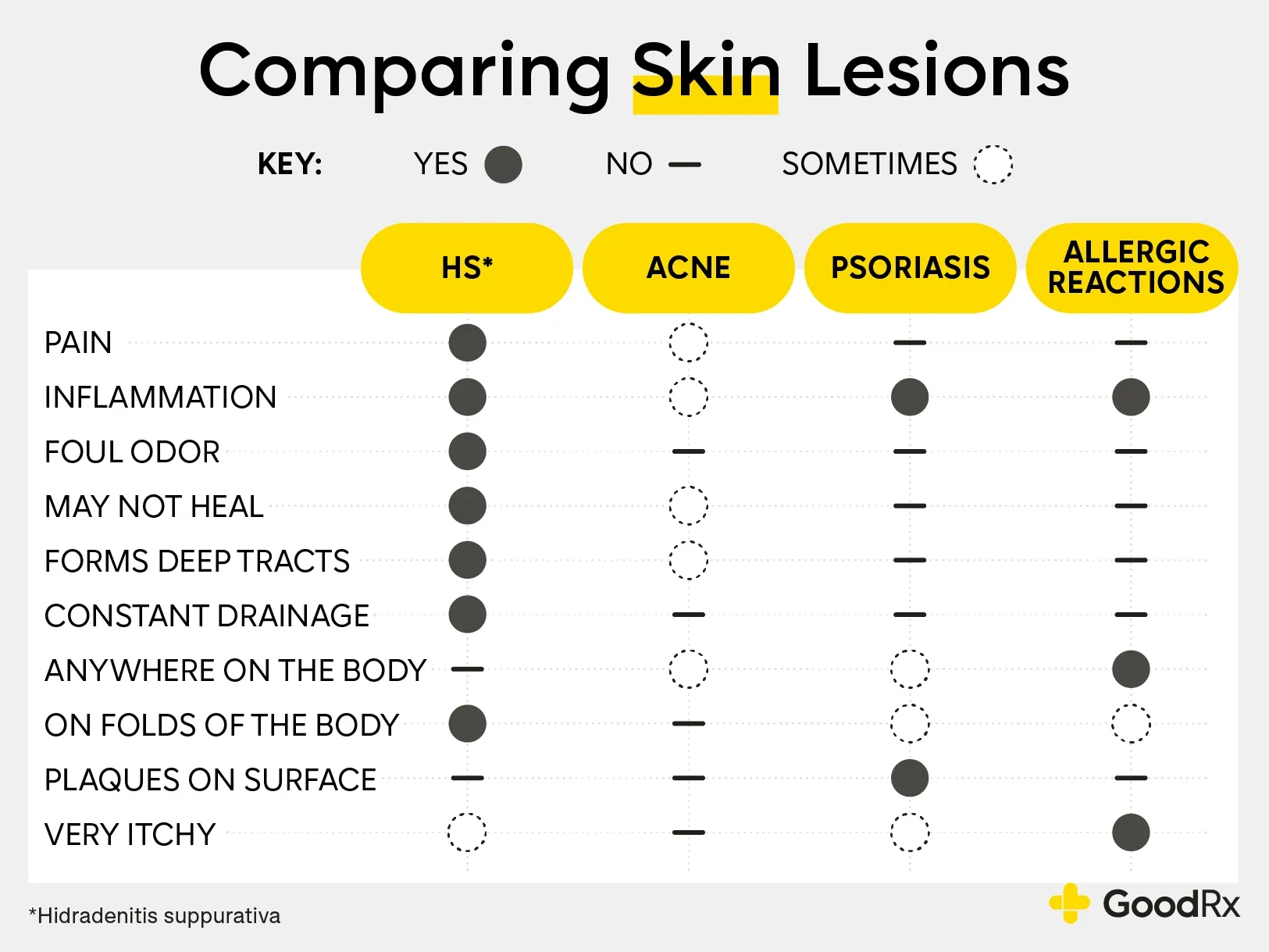
HS nodules may look like cystic acne in the beginning. A major difference is that HS generally occurs in areas where the skin folds, such as under the arms, breasts, or buttocks, or on genitals or inner thighs. Acne tends to sprout on the face, chest, and back.
Unlike psoriasis, which can be marked by thick, red plaques in the armpits and groin, HS is characterized by deep, painful nodules.
HS is bumpy in nature, so it’s also not to be confused with contact dermatitis, an itchy, flat rash on the skin.
Ilyas says that increased awareness of HS has meant that patients are coming in for treatment when they’re younger — and that’s a good thing. Earlier intervention means less progression of the disease.
“Maybe we could prevent some element of scarring down the road,” she says. “Maybe we can jump on these cases earlier and seek better therapeutic outcomes.”
This information is for informational purposes only and is not meant to be a substitute for professional medical advice, diagnosis or treatment. GoodRx is not offering advice, recommending or endorsing any specific prescription drug, pharmacy or other information on the site. GoodRx provides no warranty for any information. Please seek medical advice before starting, changing or terminating any medical treatment.
Prescription savings
Stop paying too much for your prescriptions. Compare prices, get pharmacy coupons, and save up to 80%.Resources
About GoodRx
 Find expert answers to your health questions so you can make the best decisions for yourself and your family.
Health conditions
Medications & treatment
Access & affordability
Well-being
Medication discounts


