VIDEO CENTER
Eczema
Atopic dermatitis, or eczema, can affect people of all ages — but the symptoms can also be managed to increase your quality of life.

Your clothes rub against your skin all day long, and your sheets and bedding brush against it all night long. So the detergent and other products you use on laundry day can have a big impact on your skin health and eczema symptoms.
But if you’re careful, laundry doesn’t have to cause your skin more trouble. For clean clothes without making eczema worse, try these tips from dermatologist Suzanne Friedler, MD, of the Mount Sinai Hospital and St. John’s Episcopal Hospital.
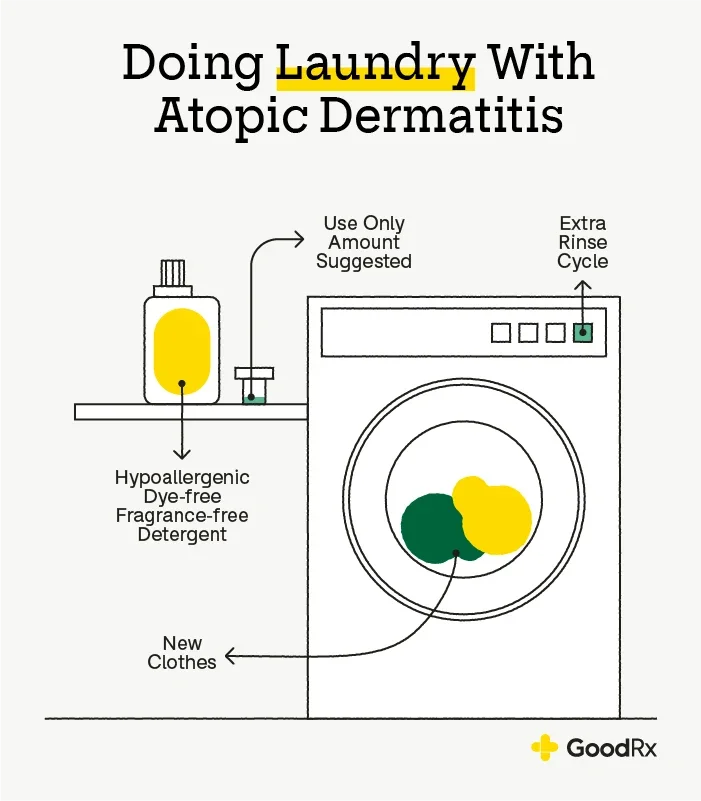
Use detergents that are hypoallergenic, dye-free, and fragrance-free. Don’t be misled by the term “unscented.” An unscented detergent still has a fragrance, but it’s masked and will still irritate sensitive skin.
Wash new clothes and bedding before you wear or use them.
Use the “extra rinse” setting on your washing machine if available. Detergent can often remain on the fabric even after rolling around in the washer and dryer. Rinsing out the clothes a little longer will get as much detergent off as possible.
Use only the amount of detergent suggested on the label. This tip comes from both laundry machine manufacturers and the American Academy of Dermatology. Too much detergent can cram the machine and make it harder to drain properly.
In addition to revamping your laundry routine, follow these rules for better showers with eczema and these tips for picking out the right moisturizer for eczema.
This information is for informational purposes only and is not meant to be a substitute for professional medical advice, diagnosis or treatment. GoodRx is not offering advice, recommending or endorsing any specific prescription drug, pharmacy or other information on the site. GoodRx provides no warranty for any information. Please seek medical advice before starting, changing or terminating any medical treatment.
Prescription savings
Stop paying too much for your prescriptions. Compare prices, get pharmacy coupons, and save up to 80%.Resources
About GoodRx
 Find expert answers to your health questions so you can make the best decisions for yourself and your family.
Health conditions
Medications & treatment
Access & affordability
Well-being
Medication discounts


