VIDEO CENTER
Type 2 Diabetes
Type 2 diabetes is a condition that occurs when your blood glucose, also called blood sugar, is too high.

You work hard to manage your diabetes. You eat well, stay active, and you take your medication. But if you’re not staying up to date on certain key health metrics (from your A1C to your cholesterol levels to your BMI), you’re missing out on a chance not only to better manage your diabetes in the long run, but also to reduce your risk of heart attack, stroke, or other diabetes-related complications. Here are the main numbers that you need to know for ultimate diabetes control.
“One of the most important tests that we do to assess your diabetes control is checking your A1C,” says Sonal Chaudhry, MD, an endocrinologist at NYU Langone Health.
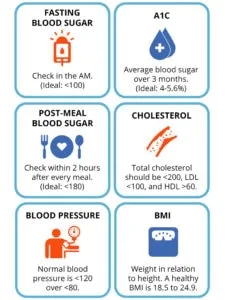
A1C is a blood test that shows your average blood glucose level over the past three months. It’s different from the blood sugar checks you may do on a daily basis.
It depends on your age, but you generally want your A1C to be less than 7. “If it’s 9 or above you probably need stronger medication,” says Sandra Arévalo, RDN, CDE, a spokesperson for the American Association of Diabetes Educators.
Not every person with type 2 diabetes needs to test their blood sugar throughout the day, but if your doctor wants you to, they'll likely want you to test your blood sugar first thing in the morning. This number should be less than 100 to 130.
Another common time doctors may want you to assess your blood sugar is within a two-hour window of eating meals. This number shouldn’t be more than 180 one to two hours after the start of a meal.
Blood pressure is the force of your blood against the wall of your blood vessels. “It’s important for you to have normal blood pressure if you have diabetes, because if your blood pressure is high it increases your risk of cardiovascular disease,” says Dr. Chaudhry.
A healthy blood pressure reading is considered less than 120/80. Anything above that is considered elevated blood pressure.
Readings 130-139/80-89 are considered stage I hypertension.
Blood pressure readings 140/90 or greater are considered stage II hypertension. This stage is more likely to be treated with medication, especially if you have other heart disease risk factors.
“Too much cholesterol can be bad for you especially if you have diabetes,” says Dr. Chaudhry. "It can increase your risk of plaque in arteries.”
There are two kinds of cholesterol in the blood: LDL is the “bad” cholesterol, which can build up and clog your blood vessels, and HDL is the “good” cholesterol, which helps get rid of the “bad.”
Your goal LDL number should be less than 100. The good stuff, HDL, should be 60 or higher. Triglycerides, another measure of fat in the blood, should be less than 150.
Being overweight or obese increases your risk of many health issues, including type 2 diabetes, heart disease, and kidney disease. Knowing your body mass index (BMI) — a measurement of the relationship between your height and weight — can help you and your doctor assess your risk.
“[A high BMI] means you’re accumulating a lot of fat in your abdominal area, close to your heart, and that puts you at a higher risk,” says Arévalo. A healthy BMI is between 19 to 25. A BMI between 25 and 30 is classified as overweight, and 30 and above is classified as obese.
When it comes to managing your diabetes, knowledge is power. “If you know these numbers, you’re more of a partner with your doctor in terms of these health care decisions,” says Paul Knoepflmacher, MD, a clinical instructor in medicine at Mount Sinai Hospital in New York City.
This information is for informational purposes only and is not meant to be a substitute for professional medical advice, diagnosis or treatment. GoodRx is not offering advice, recommending or endorsing any specific prescription drug, pharmacy or other information on the site. GoodRx provides no warranty for any information. Please seek medical advice before starting, changing or terminating any medical treatment.
Prescription savings
Stop paying too much for your prescriptions. Compare prices, get pharmacy coupons, and save up to 80%.Resources
About GoodRx
 Find expert answers to your health questions so you can make the best decisions for yourself and your family.
Health conditions
Medications & treatment
Access & affordability
Well-being
Medication discounts


