Key takeaways:
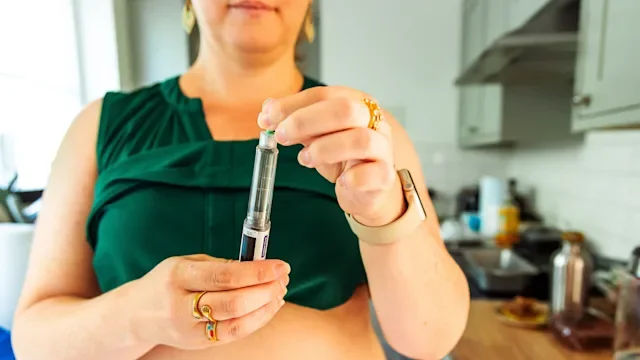
Zepbound (tirzepatide) and Wegovy (semaglutide) are popular weight-loss medications. They work in similar but slightly different ways. Both come in prefilled injection pens. But Wegovy is also available in pill form, making it a good option if you don’t want to give yourself shots.
During clinical trials, average weight loss with the highest Zepbound dose was about 21% at 72 weeks. In a separate study, average weight loss with a higher-dose version of Wegovy (called Wegovy HD) was about 19% during a similar timeframe.
Zepbound also has proven benefits for people with obstructive sleep apnea. But Wegovy is approved for cardiovascular risk reduction and to treat a type of fatty liver disease, while Zepbound is not.
If you're new to using GoodRx for Wegovy savings, pay an introductory price for the first two fills of $199 per month for the injection and $149 per month for the pill (only available for certain doses). Access Zepbound KwikPen through GoodRx starting at $299 per month. Subscribers to GoodRx for Weight Loss can also access FDA-approved brand-name GLP-1 medications like Zepbound and Wegovy.
Save on related medications
When the FDA approved Wegovy (semaglutide) in 2021, it was the first new weight-loss medication on the market since 2014. It was also the first once-weekly medication of its kind. Since then, a number of weight-loss drugs have been rolled out to try to meet the high demand for these medications. One such medication is Zepbound (tirzepatide).
Zepbound and Wegovy share a few similarities. Both come in injectable forms that are administered once a week and can cause similar side effects. But there are some key differences between them that may make one a better fit for you over the other.
1. Zepbound and Wegovy work in similar — but slightly different — ways for weight loss
For many people, Zepbound and Wegovy are effective medications for weight management. Both work to suppress your appetite, hunger, and food cravings so you eat fewer calories. They achieve this effect in similar — but slightly different — ways.
Wegovy belongs to a class of medications called glucagon-like peptide-1 (GLP-1) receptor agonists. It acts like a natural gut hormone called GLP-1, which has effects on your gut and the appetite center of your brain. This results in decreased appetite, increased feelings of fullness, and reduced cravings.
Similar to Wegovy, Zepbound has these effects by acting like GLP-1. But it also acts like a second gut hormone called glucose-dependent insulinotropic polypeptide (GIP). Because of this, Zepbound is considered a dual GIP/GLP-1 receptor agonist. GIP is thought to work together with GLP-1 in some ways for additive effects.
Good to know: Tirzepatide and semaglutide, the active ingredients in Zepbound and Wegovy, respectively, also have beneficial effects on blood glucose (sugar) levels. They do this by telling the pancreas to release insulin and lowering glucose production in the liver. For this reason, they’re used to treat Type 2 diabetes under the brand names Mounjaro (tirzepatide), Ozempic (injectable semaglutide), and Rybelsus (oral semaglutide).
2. Wegovy also comes as a pill, while Zepbound is only available as an injection
Another key difference is how Zepound and Wegovy are taken. Both medications come in single-dose prefilled injections pens. But Wegovy also comes in pill form, providing more options for treatment.
If you prefer a needle-free GLP-1 medication, the Wegovy pill can be a good choice. However, it has specific instructions to follow when taking it. To maximize absorption, you need to take your dose first thing in the morning on an empty stomach with no more than 4 oz of plain water. Wait at least 30 minutes before eating, drinking anything else, or taking other medications.
Choosing between an injectable and oral GLP-1 often comes down to factors such as your personal preference, treatment goals, and routine.
3. Zepbound and Wegovy are both effective options for weight loss
Zepbound and Wegovy are both highly effective medications for weight loss. Each has been shown to help people lose a significant amount of body weight when combined with lifestyle changes.
In clinical trials, people receiving the highest Zepbound dose lost an average of about 21% of their starting body weight at 72 weeks (about 16.5 months). In a separate trial, a higher-dose version of Wegovy (called Wegovy HD) led to an average weight loss of about 19% during a similar timeframe. Wegovy HD contains 7.2 mg of semaglutide, which is 3 times the highest standard Wegovy dose.
The two medications have also been studied head-to-head in people without diabetes. After 72 weeks, people receiving Zepbound (10 mg or 15 mg) lost an average of about 20% of their starting body weight, compared with about 14% for those receiving Wegovy (1.7 mg or 2.4 mg). However, Zepbound and Wegovy HD haven't been directly compared in a clinical trial.
4. Zepbound and Wegovy are approved for different uses and age groups
Both Zepbound and Wegovy are approved for weight loss. But each medication also has additional uses. Because of this, your health history and risk factors can make one option a better fit over the other. Age can also affect which medication is prescribed. Here’s how Zepbound and Wegovy compare.
| Zepbound uses | Wegovy injection uses | Wegovy pill uses |
|---|---|---|
|
|
|
If you have OSA, your prescriber may recommend Zepbound. But if you have heart disease or MASH, Wegovy may be a better option.
Good to know: Wegovy and Zepbound are being studied for additional uses beyond weight loss. Wegovy has shown positive results for certain people with heart failure. Zepbound is also being studied in certain people with heart failure, MASH, and chronic kidney disease.
5. Zepbound and Wegovy have different dosage schedules
When starting Zepbound or Wegovy, your dosage is slowly raised over time to help manage side effects and find the right dose. But each medication’s dosage schedule looks a bit different.
| Schedule | Zepbound injection dosage | Wegovy injection dosage | Wegovy pill dosage |
|---|---|---|---|
| Starting dosage | 2.5 mg weekly for 4 weeks | 0.25 mg weekly for 4 weeks | 1.5 mg daily for 30 days |
| Dose escalation |
|
|
|
| Maintenance dosage |
|
|
Weight loss and heart health: 25 mg daily |
If you've been using the 2.4 mg Wegovy dose for at least 4 weeks, are tolerating it well, and need additional weight loss, your prescriber may recommend switching to Wegovy HD.
Wegovy or Zepbound? Test your knowledge!
Can you switch from Wegovy to Zepbound?
Yes, it’s possible to switch from Wegovy to Zepbound. In this case, your prescriber may have you start with a lower Zepbound dose and slowly work your way up. This gives your body time to adjust to Zepbound and find the right dose for you. Another option is to switch to Wegovy HD, which may provide greater weight loss than standard Wegovy.
Can you take Zepbound and Wegovy together?
No, it’s not recommended to take both Zepbound and Wegovy. You’ll typically be prescribed one or the other — but not both at the same time. Since Zepbound and Wegovy work in similar ways, this combination could increase the risk of side effects.
If your prescribed dose isn’t working well enough for you, talk to your healthcare team. In some cases, they may be able to raise it or switch you to a different medication.
How to save on Zepbound and Wegovy
The best way to save on Zepbound or Wegovy is to use your health insurance. Which medication is more affordable can depend on your specific plan and health history. For example, your plan may cover Wegovy if you have heart disease. In other cases, Zepbound may be preferred.
But if you don’t have coverage, or if your cost is still high, there are ways to save on Zepbound and Wegovy.
GoodRx: If you’re new to using GoodRx for Wegovy savings, pay an introductory price for the first two fills of $199 per month for the injection and $149 per month for the pill (only available for certain doses). For future fills and for other Wegovy doses, pay $349 per month for the injection and $299 per month for the pill. Access Zepbound KwikPen through GoodRx starting at $299 per month. Subscribers to GoodRx for Weight Loss can also access FDA-approved brand-name GLP-1 medications like Zepbound and Wegovy.
Manufacturer copay card with coverage: You could pay as little as $25 for Zepbound if you have a commercial insurance plan that covers the medication. If you’re eligible for Wegovy’s copay card, you could pay as little as $25 per month for the injection or pill
Manufacturer copay card without coverage: If your plan doesn’t cover Zepbound, you may be able to pay $499 for a 28-day supply. If your plan doesn’t cover Wegovy or you’re uninsured, you could pay $349 for a 28-day supply of the injection.
Lower-cost vials: Lower-cost, single-dose Zepbound vials and KwikPens are available through LillyDirect for $299 (2.5 mg), $399 (5 mg), and $499 (7.5 mg, 10 mg, 12.5 mg, 15 mg) per month.
Discounts through NovoCare Pharmacy: If your commercial insurance plan doesn’t cover Wegovy, or if you’re uninsured, you could pay as little as $349 per month for Wegovy injections through NovoCare Pharmacy (lower prices available for certain doses and the pill).
Frequently asked questions
No, Zepbound and Wegovy work in a similar way, but they contain different ingredients. Zepbound contains tirzepatide, while Wegovy contains semaglutide.
It depends on your insurance coverage and pharmacy availability. Both Wegovy and Zepbound are prescription medications, and many insurance plans require prior authorization or have coverage restrictions for weight-loss medications. Supply shortages have also affected availability at times.
Some people may turn to online sources for GLP-1s like Wegovy and Zepbound. Subscribers to GoodRx for Weight Loss may be able to access FDA-approved brand-name GLP-1 medications through the program.
Neither medication is considered universally safer than the other. Zepbound and Wegovy are both FDA approved for weight loss. They share similar potential side effects, including nausea, vomiting, and diarrhea. And a comparison study found a similar occurrence of serious side effects in people using Zepbound and Wegovy.
Because the medications contain different active ingredients, some people may tolerate one better than the other. Your healthcare team can help determine which option may be better based on your medical history and individual response.
No, Zepbound and Wegovy work in a similar way, but they contain different ingredients. Zepbound contains tirzepatide, while Wegovy contains semaglutide.
Weight loss results from Zepbound versus Wegovy in a month can depend on individual response, diet, and physical activity. However, clinical trials showed that within the first month, people lost about 2% of their starting body weight with Wegovy and about 3% with Zepbound.
It depends on your insurance coverage and pharmacy availability. Both Wegovy and Zepbound are prescription medications, and many insurance plans require prior authorization or have coverage restrictions for weight-loss medications. Supply shortages have also affected availability at times.
Some people may turn to online sources for GLP-1s like Wegovy and Zepbound. Subscribers to GoodRx for Weight Loss may be able to access FDA-approved brand-name GLP-1 medications through the program.
Neither medication is considered universally safer than the other. Zepbound and Wegovy are both FDA approved for weight loss. They share similar potential side effects, including nausea, vomiting, and diarrhea. And a comparison study found a similar occurrence of serious side effects in people using Zepbound and Wegovy.
Because the medications contain different active ingredients, some people may tolerate one better than the other. Your healthcare team can help determine which option may be better based on your medical history and individual response.
The bottom line
Zepbound (tirzepatide) and Wegovy (semaglutide) are popular medications for weight loss. Both work to suppress your appetite, hunger, and food cravings. They achieve this effect in similar — but slightly different — ways.
Wegovy comes in both injectable and pill forms, while Zepbound is only available as an injection. Zepbound has proven benefits for obstructive sleep apnea. But Wegovy can offer greater flexibility and is also approved for its cardiovascular and liver benefits.
Your prescriber may consider your health history, age, and other factors when deciding whether Zepbound or Wegovy is the better option for you.

Why trust our experts?



References
ClinicalTrials.gov. (2024). A study of tirzepatide (LY3298176) in participants with heart failure with preserved ejection fraction (HFpEF) and obesity: The SUMMIT trial. National Library of Medicine.
ClinicalTrials.gov. (2024). A study of tirzepatide (LY3298176) in participants with obesity or overweight with weight related comorbidities (SURMOUNT-5). National Library of Medicine.
ClinicalTrials.gov. (2024). A study of tirzepatide (LY3298176) on the reduction on morbidity and mortality in adults with obesity (SURMOUNT-MMO). National Library of Medicine.
ClinicalTrials.gov. (2025). A research study to see how semaglutide helps people with excess weight, lose weight (STEP UP). National Library of Medicine.
ClinicalTrials.gov. (2025). A study of tirzepatide (LY3298176) in participants with nonalcoholic steatohepatitis (NASH) (SYNERGY-NASH). National Library of Medicine.
ClinicalTrials.gov. (2025). A study of tirzepatide (LY3298176) in participants with overweight or obesity and chronic kidney disease with or without type 2 diabetes (TREASURE-CKD). National Library of Medicine.
ClinicalTrials.gov. (2025). A study of tirzepatide (LY3298176) once weekly in adolescent participants who have obesity or overweight with weight-related comorbidities. National Library of Medicine.
ClinicalTrials.gov. (2025). Research study on whether semaglutide works in people with non-alcoholic steatohepatitis (NASH) (ESSENCE). National Library of Medicine.
Colhoun, H. M., et al. (2024). Long-term kidney outcomes of semaglutide in obesity and cardiovascular disease in the SELECT trial. Nature Medicine.
Eli Lilly and Company. (2024). Lilly's Zepbound (tirzepatide) superior to Wegovy (semaglutide) in head-to-head trial showing an average weight loss of 20.2% vs. 13.7%.
Eli Lilly and Company. (2024). Tirzepatide reduced the risk of developing type 2 diabetes by 94% in adults with pre-diabetes and obesity or overweight.
Eli Lilly and Company. (2025). Lilly launches additional Zepbound vial doses and offers new savings for self-pay patients.
Jastreboff, A. M., et al. (2022). Tirzepatide once weekly for the treatment of obesity. The New England Journal of Medicine.
Kosiborod, M. N., et al. (2023). Semaglutide in patients with heart failure with preserved ejection fraction and obesity. The New England Journal of Medicine.
Lincoff, A. M., et al. (2023). Semaglutide and cardiovascular outcomes in obesity without diabetes. The New England Journal of Medicine.
Malhotra, A., et al. (2024). Tirzepatide for the treatment of obstructive sleep apnea and obesity. The New England Journal of Medicine.
National Heart, Lung, and Blood Institute. (2022). Childhood obesity. National Institutes of Health.
Novo Nordisk. (2024). Wegovy semaglutide injection 2.4mg [package insert].
Novo Nordisk. (2025). Novo Nordisk A/S: Semaglutide 7.2 mg s.c. achieved 20.7% weight loss in the STEP UP obesity trial, and 18.7% regardless of treatment adherence.
U.S. Food and Drug Administration. (2024). FDA approves first medication for obstructive sleep apnea.
U.S. Food and Drug Administration. (2024). FDA approves first treatment to reduce risk of serious heart problems specifically in adults with obesity or overweight.
Wilding, J. P. H., et al. (2021). Once-weekly semaglutide in adults with overweight or obesity. The New England Journal of Medicine.
Zaffina, I., et al. (2023). Effect of dual glucose-dependent insulinotropic peptide/glucagon-like peptide-1 receptor agonist on weight loss in subjects with obesity. Frontiers in Endocrinology.