Key takeaways:
White noise is safe for most people when used at a low volume and kept at a distance.
Practice extra caution when using white noise for babies and young children. Turn it off once they’re asleep and keep it far from their ears.
White noise is a tool, not a treatment. If you have a sleep disorder or tinnitus, talk to your healthcare professional before using it to fall asleep or to mask ear ringing.
It’s 7PM. Your baby finally falls asleep and you hope they stay that way so you can have a real conversation with another adult.
Or maybe you live on a street that never really quiets down. Every passing car feels like a personal attack on your ability to relax. White noise seems like the obvious fix. It creates a steady wall of sound that can block out the chaos and help everyone stay asleep.
But is white noise bad for you? Is it actually safe? And does it even work? Read on to find out.
Search and compare options
What is white noise?
White noise is what you get when every sound frequency the human ear can detect plays at the same time and at the same volume. Think of it like light: White light contains every color of the visible spectrum blended together. White noise works the same way, mixing every pitch — high and low — into one steady wall of sound.
People often use white noise to help them sleep, study, or concentrate. It works like a kind of audio blanket.
The brain is wired to hunt for sound patterns. When you hear a door creaking or an alarm going off, your brain pays attention. But when every frequency is playing at once, there are no surprises. This means your brain files it as "background," making it easier to relax.
It all seems like a good thing, right? As it turns out, white noise has both benefits and risks.
Is white noise bad for you?
White noise isn’t necessarily bad for you. Like most things, it depends on how you use it. The volume and how close it is to you are what matter most.
Sound is measured in decibels (dB). When you listen to white noise at 70 dB or below, it’s generally safe. That’s about the volume of a normal conversation or a running dishwasher. Volumes higher than this can put your hearing at risk.
When white noise is too loud or too close to you, it can damage your hearing over time. This happens the same way as any prolonged loud noise can. This is especially true if you’re exposed for more than 8 hours. Health experts recommend adults limit their weekly listening at 40 hours total, at no more than 80 dB.
White noise can also disrupt deep sleep, leaving you groggy even after a full night’s rest. And the tricky thing is that most white noise machines don’t have built-in volume limits.
Is white noise bad for kids?
For kids, the safe volume threshold is even lower — around 70 dB. Experts recommend that a child’s total listening time should not exceed 40 hours per week at75 dB.
White noise may be particularly risky for babies and toddlers. Animal studies found that continuous white noise exposure can slow the brain’s hearing development. This may delay key milestones in sound processing and language development.
Are there benefits of white noise?
Not all the news about white noise is bad. Research has uncovered some potential benefits as well.
Sleep
For adults, white noise may help reduce nighttime wake-ups caused by environmental noise. Across dozens of studies, it has been shown to help some people fall asleep faster and stay asleep during the night. A large review of randomized controlled trials also found that it may improve overall sleep quality in adults of all ages. That said, the evidence is mixed — not everyone responds to white noise in the same way.
Focus
At the right volume, white noise may improve attention, memory, and learning. One study found that it stimulates dopamine activity in the brain, which helps with taking in new information. Another study showed it helps people learn and retain new words.
ADHD
For kids with attention-deficit hyperactivity disorder (ADHD), some research suggests that white noise may:
Improve reading speed
Reduce disruptive behavior
Sharpen attention
In some studies, the effect was comparable to stimulant medication when it came to performing thinking tasks.
Other benefits
White noise has also been used to:
Reduce anxiety and depression in people recovering from heart surgery
Ease pain in newborns during vaccination
Help mask tinnitus, a condition that causes persistent ringing in the ears
How does white noise affect your brain?
Your brain is always working in the background, scanning your environment for anything unusual — a sudden noise, a voice, or a potential threat. It’s tiring, even when you don’t realize it’s happening.
White noise gives your brain a break from that job. It reduces the impact of sudden changes that your brain might flag as dangerous. This can reduce mental activity in a way that feels deeply relaxing.
At the right volume, white noise also nudges your brain’s dopamine system, which is linked to motivation, memory, and attention. That’s why the same sound that helps one person drift off to sleep can help another lock in and focus. And this is why people with ADHD may respond to it differently than others.
Less noise clutter for your brain means less mental fatigue and more space for what you actually need: sleep, concentration, or just a moment of quiet in a noisy world.
Is it OK to use white noise every night?
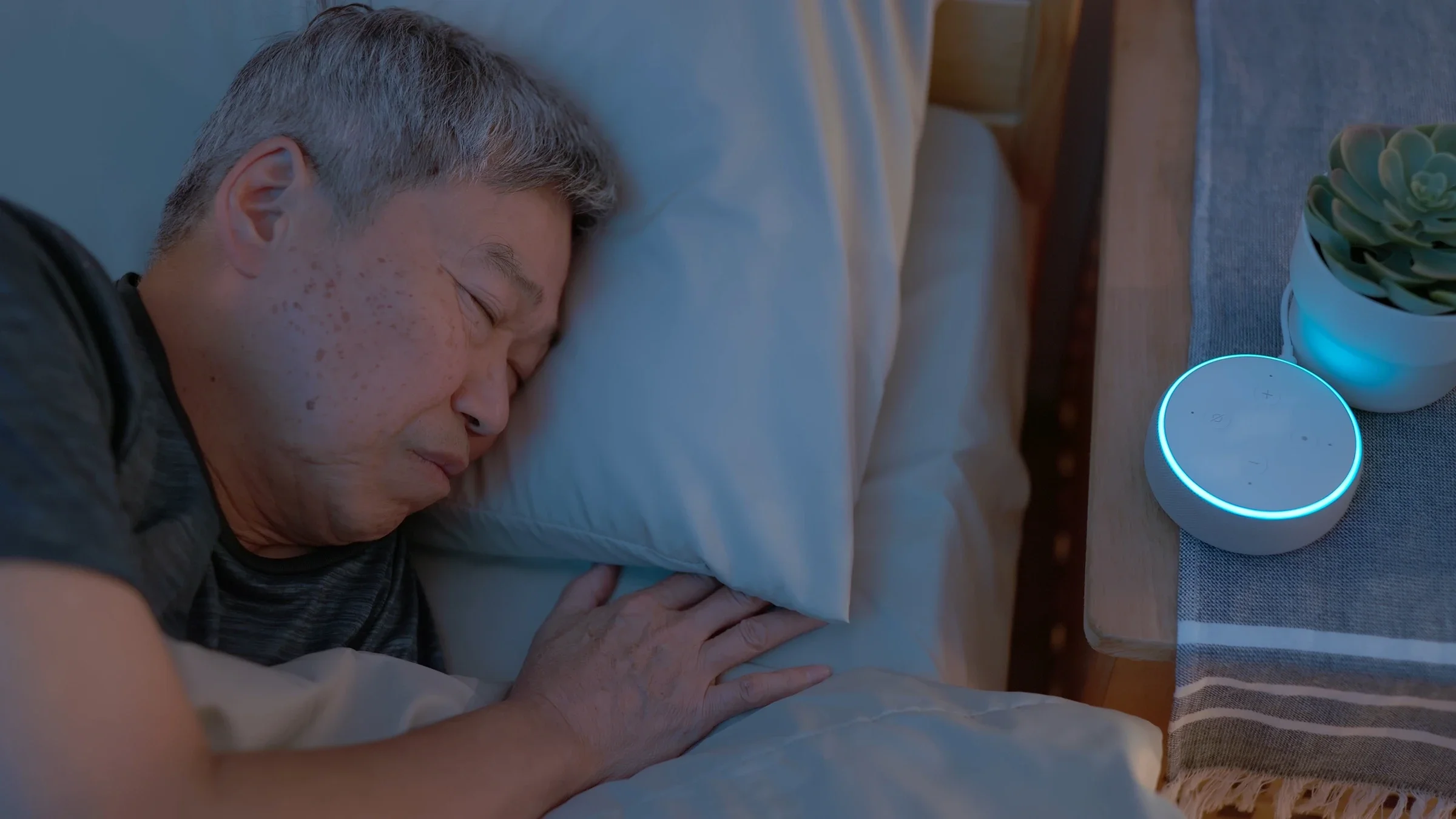
For most people, using white noise every night is fine, as long as the volume is low and the device isn’t right next to your head.
One thing to know about is dependency. Some research suggests that once your brain gets used to white noise as part of your sleep routine, it may start to rely on it as a signal that it’s time to sleep. That’s not dangerous, but it does mean that sleeping somewhere without it — like a hotel room — might feel harder.
It’s also important to note that the research on white noise is still new. Most studies have been pretty small, so while plenty of people swear by it, the science hasn’t fully confirmed that it works the same way for everyone. That said, it’s still probably a lot gentler on your body than sleep medications.
If white noise works for you, you don’t need to stop. There are a few things you can do to minimize any risks.
How can you use white noise safely?
To use white noise safely, do these four simple things:
Keep the volume at or below 70 dB. Make sure the noise is quiet enough that you can hold a normal conversation without raising your voice.
Place the device at least 6 feet away from you — and even further from infants and young children.
If you’re using it for babies or toddlers at bedtime, turn it off once they’re asleep instead of running it all night.
Use theNational Institute for Occupational Safety and Health (NIOSH) Sound Level Meter app to check the actual decibel level in your room. Most people are surprised by how loud their devices actually are.
Are there safer alternatives to white noise?
When used correctly, white noise is safe for most people. But that doesn’t mean it’s for everyone. Some people find it irritating or prefer something that feels a little more natural. The good news is that there are alternatives:
Earplugs are the simplest solution. The tradeoff is that some people find them uncomfortable to sleep in. They also won’t help if silence makes it harder for you to wind down.
Nature sounds like rain, ocean waves, or rustling leaves can work like white noise. Many people find these easier to relax with because they feel familiar and calming.
Relaxing music works well for some people, especially instrumental tracks without lyrics. Vocals tend to grab your brain’s attention more than instrumental music.
Whatever you choose, keep the same volume rule in mind — under 70 dB — and you’re in good shape.
Frequently asked questions
All three types of noise are made up of sounds across varying frequencies:
White noise plays all frequencies at equal volume, creating that flat "shhhh" sound.
Pink noise lowers the higher tones, making it softer and more textured — like a steady rainfall.
Brown noise goes even deeper, with a low, full rumble — like heavy rain on a roof or ocean waves.
As for which type is best for sleep or focus, the science hasn’t settled that yet. It comes down to what your brain finds most relaxing. Whichever you choose, keep the volume under 70 dB and the device at a distance.
The worst sounds for your sleep are sudden and unpredictable — like sirens, car alarms, or slamming doors. Your brain registers these as threats and can jolt your nervous system awake, often before you even notice. Traffic and construction noise also fall into this category.
Closer to home, a snoring partner or restless pet can be just as disruptive, even if the sound is consistent.
Tinnitus often feels loudest in silence, and white noise can help mask the ringing for relief. Many people respond well to white noise, but individual responses can vary. Some people notice it makes tinnitus worse. If you have tinnitus, use white noise cautiously since long-term effects are still unclear. Talk to your healthcare team before making it part of your daily routine.
All three types of noise are made up of sounds across varying frequencies:
White noise plays all frequencies at equal volume, creating that flat "shhhh" sound.
Pink noise lowers the higher tones, making it softer and more textured — like a steady rainfall.
Brown noise goes even deeper, with a low, full rumble — like heavy rain on a roof or ocean waves.
As for which type is best for sleep or focus, the science hasn’t settled that yet. It comes down to what your brain finds most relaxing. Whichever you choose, keep the volume under 70 dB and the device at a distance.
The worst sounds for your sleep are sudden and unpredictable — like sirens, car alarms, or slamming doors. Your brain registers these as threats and can jolt your nervous system awake, often before you even notice. Traffic and construction noise also fall into this category.
Closer to home, a snoring partner or restless pet can be just as disruptive, even if the sound is consistent.
Tinnitus often feels loudest in silence, and white noise can help mask the ringing for relief. Many people respond well to white noise, but individual responses can vary. Some people notice it makes tinnitus worse. If you have tinnitus, use white noise cautiously since long-term effects are still unclear. Talk to your healthcare team before making it part of your daily routine.
The bottom line
White noise is a simple, accessible tool with real science behind it. It can help you sleep better, lighten the load on your brain, and even assist with conditions like ADHD and tinnitus. The risks of white noise come down to volume and proximity. Keep the volume under 70 dB, and place the device at least 6 feet away. For children, take extra precautions: Keep the device even further away and turn it off once they fall asleep.

Why trust our experts?



References
Angwin, A. J., et al. (2017). White noise enhances new-word learning in healthy adults. Scientific Reports.
Attarha, M., et al. (2018). Unintended consequences of white noise therapy for tinnitus-otolaryngology’s cobra effect: A review. JAMA Otolaryngology Head & Neck
Surgery.
Capezuti, E., et al. (2022). Systematic review: Auditory stimulation and sleep. Journal of Clinical Sleep Medicine.
Ding, Y., et al. (2025). Impact of white noise on sleep quality across age groups and in critically ill/non-critically ill patients: A systematic review and meta-analysis of randomized controlled trials. Sleep Medicine.
Herweg, N. A., et al. (2015). Differential effects of white noise in cognitive and perceptual tasks. Frontiers in Psychology.
The Howard Hughes Medical Institute. (2018). White noise delays auditory organization in the brain.
Ilkkaya, N. K., et al. (2014). The effects of music, white noise, and ambient noise on sedation and anxiety in patients under spinal anesthesia during surgery. Journal of Perianesthesia Nursing.
Karakoç, A., et al. (2014). Effects of white noise and holding on pain perception in newborns. Pain Management Nursing.
Muzet, P. (2007). Environmental noise, sleep and health. Sleep Medicine Reviews.
National Institute for Occupational Safety and Health. (2024). NIOSH sound level meter app. Centers for Disease Control and Prevention.
National Institute on Deafness and Other Communication Disorders. (2025). Noise-induced hearing loss. National Institutes of Health.
Pan, T., et al. (2015). Differences among patients that make their Tinnitus Worse or Better. American Journal of Audiology.
Rausch, V. H., et al. (2014). White noise improves learning by modulating activity in dopaminergic midbrain regions and right superior temporal sulcus. Journal of Cognitive Neuroscience.
Riedy, S. M., et al. (2021). Noise as a sleep aid: A systematic review. Sleep Medicine Reviews.
Söderlund, G., et al. (2007). Listen to the noise: Noise is beneficial for cognitive performance in ADHD. Journal of Child Psychology and Psychiatry, and Allied Disciplines.
Söderlund, G. B., et al. (2016). Comparing auditory noise treatment with stimulant medication on cognitive task performance in children with attention deficit hyperactivity disorder: Results from a pilot study. Frontiers in Psychology.
Suzuki, F. A. B., et al. (2018). Psychoacoustic classification of persistent tinnitus. Brazilian Journal of Otorhinolaryngology.
Yoon, H., et al. (2022). External auditory stimulation as a non-pharmacological sleep aid. Sensors.