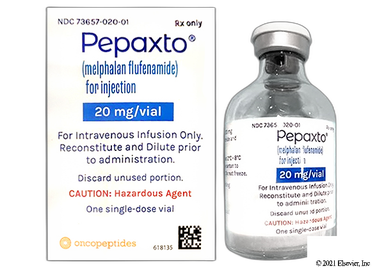
Pepaxto
Pepaxto (melphalan flufenamide) is a chemotherapy medication that’s used to treat adults with a certain type of blood cancer called multiple myeloma. It’s given as an injection into the vein at an infusion center or provider’s office. This medication causes side effects such as low blood cell counts and tiredness.
Please note: The manufacturer withdrew Pepaxto (melphalan flufenamide) from the market in the United States and is no longer available.


What is Pepaxto (melphalan flufenamide)?
What is Pepaxto (melphalan flufenamide) used for?
- Advanced multiple myeloma in adults who’ve previously taken at least four therapies
How Pepaxto (melphalan flufenamide) works
Pepaxto (melphalan flufenamide) is a medication that’s made up of two parts that work to find and kill cancer cells in the body.
- Pepaxto (melphalan flufenamide) contains a peptide (a short chain of amino acids). The peptide helps the medication find and enter multiple myeloma cancer cells in the body.
- Once it gets inside the cancer cell, the chemotherapy part — melphalan — works as an alkylating agent. It attaches to the cancer cells’ DNA and damages it, which usually causes the cancer cell to die. This helps slow or stop the spread of cancer cells.
Drug facts
| Common Brands | Pepaxto |
|---|---|
| Drug Class | Alkylating agent |
| Controlled Substance Classification | Not a controlled medication |
| Generic Status | No lower-cost generic available |
| Availability | Discontinued |

Side effects of Pepaxto (melphalan flufenamide)
The following side effects may get better over time as your body gets used to the medication. Let your healthcare provider know immediately if you continue to experience these symptoms or if they worsen over time.
Common Side Effects
- Low blood cell counts (up to 99%)
- Tiredness (55%)
- Nausea (32%)
- Diarrhea (27%)
- Fever (24%)
- Respiratory tract infection (24%)
- Cough (17%)
- Constipation (15%)
Less Common Side Effects
- Vomiting
- Lower appetite
- Headache
- Dizziness
- Bone pain
- Back pain
- Swelling in legs
- Trouble sleeping
- Low potassium
Note: Side effects were reported by people who took Pepaxto and dexamethasone.
Pepaxto (melphalan flufenamide) serious side effects
Contact your healthcare provider immediately if you experience any of the following.
- Bleeding: nosebleeds, unexplained bruising, blood in urine or stool, sudden headache
- Low white blood cells: fever, signs of infection such as cough, body aches, or chills

Pros and cons of Pepaxto (melphalan flufenamide)
Pros
- Only given once every 4 weeks
- An option for people who’ve already tried four or more treatments
- Works in a unique way to help target cancer cells specifically
Cons
- No longer available in the United States
- Given intravenously (injection into a vein), so requires a needle for administration
- Can cause low blood cell counts and nausea

Pharmacist tips for Pepaxto (melphalan flufenamide)

- It’s recommended that you have a central IV line to take Pepaxto (melphalan flufenamide). This can either be a port, which is a device placed under the skin in your upper chest, or a peripherally inserted central catheter (PICC) line. Discuss with your provider about which option is best for you and how to take care of your central IV line.
- Wash your hands often, avoid crowds, and wash raw fruits and vegetables thoroughly before eating them to help prevent getting sick. This is important because Pepaxto (melphalan flufenamide) can sometimes cause low white blood cell counts, which can cause your body to have trouble fighting infections if you get sick.
- Regularly check your body temperature (i.e., once a day). Call your provider as soon as possible if your temperature is 100.4ºF or higher; this means you have a fever. It’s important for your provider to know if you get sick. Sometimes, a fever can be the only sign that you’re sick.
- Contact your provider right away if you notice unusual bruising, nosebleeds, or blood in stool or urine. These can be signs of low levels of platelets, which are important blood cells that help make blood clots and prevent bleeding. Treatment with Pepaxto (melphalan flufenamide) might lower the platelet levels in your body, which can prevent your body from stopping any bleeding as well.

Risks and warnings for Pepaxto (melphalan flufenamide)
Pepaxto (melphalan flufenamide) can cause some serious health issues. This risk may be even higher for certain groups. If this worries you, talk to your doctor or pharmacist about other options.
Low platelets
Some people who take Pepaxto (melphalan flufenamide) might have low levels of platelets in their body, especially during the first two months of treatment. Platelets are the cells in your blood that form blood clots and prevent bleeding. So when you don’t have enough platelets, your body can’t stop bleeding as well. Your provider will track your blood cell counts while you’re taking Pepaxto (melphalan flufenamide). Call your provider right away if you have signs of low platelet levels such as bruising, nose bleeds, or blood in stool or urine.
Low white blood cells
People who take Pepaxto (melphalan flufenamide) often have low blood cell counts, particularly low white blood cells (neutropenia). White blood cells are an important part of your immune system, so when they’re low, you might be at risk for serious infections. Your provider will regularly check your blood cell counts while you’re taking Pepaxto (melphalan flufenamide). You can lower your risk of getting sick by washing your hands often and avoiding crowds. Regularly check your temperature, and call your provider right away if your temperature is 100.4ºF or higher.
Low red blood cells (anemia)
Most people who take Pepaxto (melphalan flufenamide) develop a low red blood cell count, also called anemia. When your red blood cells are low, you might feel tired and feel like you can’t catch your breath. Sometimes, anemia can be managed with blood transfusions or supplements, like iron. Other times, your provider might lower your dose of Pepaxto (melphalan flufenamide) if your red blood cell count drops. Contact your provider if you’re feeling extremely tired or having trouble breathing.
Infections
People who take Pepaxto (melphalan flufenamide) commonly develop infections, such as pneumonia. You’re already at risk for infections when you have multiple myeloma because your immune system might not work as well. Additionally, the treatment you take for multiple myeloma, such as Pepaxto (melphalan flufenamide), can lower your immune system even more. Because of this, your body can’t fight infections as well.
Your provider might recommend that you take certain antivirals or antibiotics to help prevent infections while you get treated with Pepaxto (melphalan flufenamide). It’s important that you regularly check your body temperature and seek medical help right away if it’s ever 100.4ºF or higher. This means that you have a fever and possibly an infection that needs further treatment.
Dangerous when given at high doses
In one animal study, giving Pepaxto (melphalan flufenamide) at a higher than recommended dose caused deaths. It’s not recommended to take Pepaxto (melphalan flufenamide) at a dose higher than 40 mg once every 28 days.
New cancers
Some people who took Pepaxto (melphalan flufenamide) later developed a new cancer, such as myelodysplastic syndrome (MDS) or acute leukemia. Your provider will check for any signs of new cancers, even after you stop taking Pepaxto (melphalan flufenamide). Typically, your provider will check for any new cancers by asking you for blood draws, so it’s important for you to go to your appointments for lab tests as your provider recommends.
Harm to unborn baby
- Risk factors: Pregnancy
Because of the way Pepaxto (melphalan flufenamide) works, the medication might harm an unborn baby or raise the risk for miscarriage (pregnancy loss). If you or your partner can get pregnant, use birth control while you’re taking Pepaxto (melphalan flufenamide). Continue to use birth control for 6 months after the last dose (for females) and at least 3 months after the last dose (for males). Let your provider know right away if you or your partner becomes pregnant while you’re taking Pepaxto (melphalan flufenamide).

Pepaxto (melphalan flufenamide) dosage
Typical dosage for Pepaxto (melphalan flufenamide)
The usual dose is 40 mg given intravenously (IV), or through the vein, once every 28 days. Pepaxto (melphalan flufenamide) is given together with dexamethasone.

Pepaxto (melphalan flufenamide) contraindications
Contraindications are specific health conditions or situations in which a person should not take a medication due to safety concerns. If you have any of the following conditions or if any of the following apply to you, let your healthcare provider know because Pepaxto (melphalan flufenamide) will not be safe for you to take.
- Allergic reaction to Pepaxto (melphalan flufenamide) or melphalan



