Penbraya
Penbraya (MenABCWY) is a vaccine that helps prevent meningococcal disease, including meningitis, caused by certain types of Neisseria meningitidis bacteria. This vaccine is approved for people ages 10 to 25. Penbraya is given as a shot into the muscle in a 2-dose series, 6 months apart. It's given by a trained healthcare professional at a medical office, clinic, or pharmacy. Common side effects include pain where you got the shot, feeling tired, and headache.


What is Penbraya?
What is Penbraya used for?
- Prevention of meningococcal disease caused by Neisseria meningitidis A, B, C, W, and Y bacteria
How Penbraya works
Penbraya is a vaccine. It trains your immune system to make protective antibodies against five types of Neisseria meningitidis bacteria (A, B, C, W, and Y). This helps your body fight these germs if you get exposed to them in the future. It helps protect you from serious illness.
Drug facts
| Common Brands | Penbraya |
|---|---|
| Drug Class | Vaccine |
| Controlled Substance Classification | Not a controlled medication |
| Generic Status | No lower-cost generic available |
| Availability | Prescription only |

Side effects of Penbraya
The following side effects may get better over time as your body gets used to the medication. Let your healthcare provider know immediately if you continue to experience these symptoms or if they worsen over time.
Common Side Effects
- Pain at the injection site (84%–89%)
- Fatigue or tiredness (48%–52%)
- Headache (40%–47%)
- Redness at the injection site (23%–26%)
- Muscle pain (23%–26%)
- Swelling at the injection site (24%–25%)
- Joint pain (18%–20%)
- Chills (16%–20%)
Less Common Side Effects
- Fever
- Diarrhea
- Vomiting
Penbraya serious side effects
Contact your healthcare provider immediately if you experience any of the following.
- Serious allergic reaction: hives, rash, itching, nausea, dizziness, feeling faint, shortness of breath, trouble breathing, swelling of the face or throat
The following Penbraya side effects have also been reported
Side effects that you should report to your care team as soon as possible:
- Allergic reactions—skin rash, itching, hives, swelling of the face, lips, tongue, or throat
- Feeling faint or lightheaded
Side effects that usually do not require medical attention (report these to your care team if they continue or are bothersome):
- Chills
- General discomfort and fatigue
- Headache
- Joint pain
- Muscle pain
- Pain, redness, or irritation at injection site

Get your GoodRx coupon

Pros and cons of Penbraya
Pros
- Protects against five common meningococcal bacterial groups (A, B, C, W, and Y) with one vaccine series
- Vaccine series is just 2 doses, given 6 months apart
- Can be used instead, when both MenACWY vaccine and Trumenba (MenB vaccine) are due on the same day
Cons
- Must be given as an injection into the shoulder muscle
- Common to feel tired or soreness where you got the shot
- Doesn’t treat active infection

Pharmacist tips for Penbraya

- Penbraya works best as a 2-dose series given 6 months apart. Put both dates on your calendar to help you remember when the second dose is. This helps the vaccine work its best to protect you.
- If you have a high fever or feel very sick on the day of your Penbraya shot, ask a healthcare professional if you should reschedule. This helps make sure your body can build as much protection against meningococcal disease as it can.
- The healthcare professional might suggest sitting for 15 minutes after your Penbraya shot. Fainting can happen with any vaccine. Staying seated lowers your risk of getting hurt from a fall and keeps you safe.
- Penbraya often causes arm pain, tiredness, and headache for a few days. A cool compress for arm pain and light activity can help.
- Watch for signs of an allergic reaction after getting Penbraya. Severe allergy is rare. But get medical help right away if you have trouble breathing, swelling of the face or throat, hives, or dizziness.
- Keep in mind that Penbraya doesn't protect you right away. Your body builds protection after each dose and is strongest after you finish the series. The vaccine works very well, but it might not guarantee full protection for everyone.
- If you have a severe reaction to the Penbraya vaccine, call your primary care provider. You can also report it to the vaccine adverse event reporting system (VAERS). To do this, visit the VAERS website or call 1-800-822-7967.

Risks and warnings for Penbraya
Penbraya can cause some serious health issues. This risk may be even higher for certain groups. If this worries you, talk to your doctor or pharmacist about other options.
Severe allergic reactions
Like with any vaccine, there's a rare chance of a severe allergic reaction to Penbraya. After your shot, the healthcare professional might ask you to stay for a short time. That way, they can watch you and help if an allergic reaction happens.
Allergic reactions can sometimes happen after you've left the clinic. Get medical help right away if you feel faint or dizzy, have hives, have swelling of the face or throat, or have trouble breathing.
Fainting
- Risk factors: Fainting after receiving vaccines in the past
Some people have fainted after receiving injectable vaccines, like Penbraya. Signs that you might faint are blurry vision, feeling lightheaded, nausea, sweating, or pale skin. Tell the healthcare professional if you've fainted after getting vaccines so they can watch you closely.
Lower response to Penbraya for people with a weakened immune system
- Risk factors: Medical conditions that weaken the immune system | Taking medications that lower your immune system
Penbraya might not work as well in people with a weakened immune system. This means they could still get very sick from meningococcal disease or meningitis, even after getting the vaccine.
Tell your primary care provider or healthcare team about all your health problems and medications before getting Penbraya. Some conditions, like HIV or cancer, can weaken your immune system. Some medications can do this too. This includes high-dose corticosteroids and transplant medications. If this applies to you, talk to your primary care provider before getting the vaccine. They might recommend extra doses of a meningitis vaccine over time to keep you protected.
Guillain-Barré syndrome
- Risk factors: History of Guillain-Barré syndrome
Guillain-Barré syndrome (GBS) has happened in some people after they received a different meningococcal vaccine. It’s unclear if GBS can happen with Penbraya. If you’ve had GBS before, tell the healthcare professional so they can weigh the benefits and risks for you.
Watch for symptoms of GBS during the days to weeks after your Penbraya vaccination. This can include new tingling, weakness, trouble walking, or trouble breathing. If any of these happen, get medical help right away.

Penbraya dosage
 Kit
Kit| Dosage | Quantity | Price as low as | Price per unit |
|---|---|---|---|
| 0.5ml dose of | 1 kit | $254.71 | $254.71 |
Typical dosage for Penbraya
- Ages 10 through 25 years old: The typical dose is 1 injection (0.5 mL) into the shoulder muscle given by a healthcare professional. Penbraya is given as two doses, 6 months apart.

How much does Penbraya cost?
$254.71

What are alternatives to Penbraya?

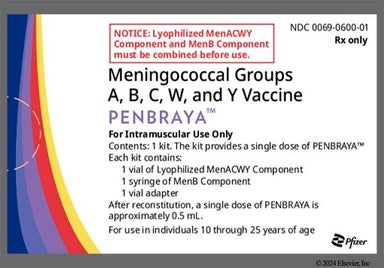
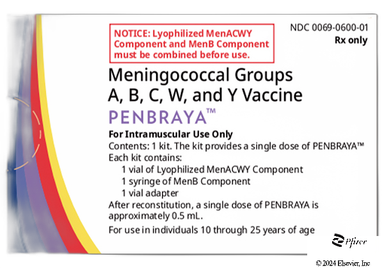
Penbraya images