Parsabiv
Parsabiv (etelcalcetide) is an injectable medication used to lower parathyroid hormone (PTH) levels in people with kidney problems who are on hemodialysis. It's convenient because it's given by a healthcare provider 3 times a week, at the end of dialysis sessions. But it can put you at risk for low calcium and cause side effects like muscle spasms and tingling in the hands and feet.


What is Parsabiv (etelcalcetide)?
What is Parsabiv (etelcalcetide) used for?
- Secondary hyperparathyroidism (too much parathyroid hormone in the body) in adults with chronic kidney disease on dialysis
How Parsabiv (etelcalcetide) works
Parsabiv (etelcalcetide) is a calcimimetic, meaning it acts like calcium in your body. It activates a protein called the calcium-sensing receptor in your parathyroid glands (small pea-like structures in your neck). This lowers the amount of parathyroid hormone (PTH) produced in your body, which in turn, lowers your blood calcium level.
Drug facts
| Common Brands | Parsabiv |
|---|---|
| Drug Class | Calcimimetic |
| Controlled Substance Classification | Not a controlled medication |
| Generic Status | No lower-cost generic available |
| Availability | Prescription only |

Side effects of Parsabiv (etelcalcetide)
The following side effects may get better over time as your body gets used to the medication. Let your healthcare provider know immediately if you continue to experience these symptoms or if they worsen over time.
Common Side Effects
- Muscle cramps, tingling sensation in hands and feet, and other symptoms of low calcium levels (64%)
- Muscle spasms (12%)
- Diarrhea (11%)
- Nausea (11%)
- Vomiting (9%)
- Headache (8%)
- Pins and needles feeling (6%)
Less Common Side Effects
- Fast heartbeat, difficulty breathing, and other symptoms of high potassium levels
- Muscle aches
- Low appetite, bone pain, and other symptoms of low phosphorous levels
Parsabiv (etelcalcetide) serious side effects
Contact your healthcare provider immediately if you experience any of the following.
- Dangerously low blood calcium levels: muscle pain or spasms, seizures, irregular heart rhythm(s)
The following Parsabiv (etelcalcetide) side effects have also been reported
Side effects that you should report to your care team as soon as possible:
- Allergic reactions—skin rash, itching, hives, swelling of the face, lips, tongue, or throat
- Bone pain
- Heart failure—shortness of breath, swelling of the ankles, feet, or hands, sudden weight gain, unusual weakness or fatigue
- Low blood pressure—dizziness, feeling faint or lightheaded, blurry vision
- Low calcium level—muscle pain or cramps, confusion, tingling, or numbness in the hands or feet
- Stomach bleeding—bloody or black, tar-like stools, vomiting blood or brown material that looks like coffee grounds
Side effects that usually do not require medical attention (report these to your care team if they continue or are bothersome):

Pros and cons of Parsabiv (etelcalcetide)
Pros
- Works well to lower your PTH levels and keep them in a normal range with regular dosing
- Don't need to worry about giving this injection to yourself, given by a healthcare provider
- Only need to get it three times a week at the end of dialysis
- Dose can be adjusted based on your response
Cons
- Not a good option for those with certain other health conditions (e.g. heart failure, stomach inflammation)
- Can cause dangerously low calcium levels if taken with other medications that lower calcium
- Can only be given to people with kidney problems on dialysis
- Not recommended in breastfeeding females because it might be present in breastmilk

Pharmacist tips for Parsabiv (etelcalcetide)

- If your provider is switching you from cinacalcet (Sensipar) (another medication that lowers PTH) to Parsabiv (etelcalcetide), you must stop cinacalcet (Sensipar) at least a week before getting Parsabiv (etelcalcetide) injections. Your provider will check your calcium levels closely and often to make sure your calcium level doesn't get dangerously low.
- Signs of low calcium levels include tingling, muscle aches, muscle spasms (twitching), and seizures. If you experience any of these symptoms contact your provider.
- Keep up with your weekly and/or monthly labs that your provider orders for you so that they can keep a close eye on your blood calcium and PTH levels.
- It's unknown if Parsabiv (etelcalcetide) is safe during pregnancy or breastfeeding, so speak to your provider about the risks and benefits if you're planning to become pregnant or if you're currently pregnant or breastfeeding.

Risks and warnings for Parsabiv (etelcalcetide)
Parsabiv (etelcalcetide) can cause some serious health issues. This risk may be even higher for certain groups. If this worries you, talk to your doctor or pharmacist about other options.
Hypocalcemia (low blood calcium levels)
- Risk factors: Taking other medications that lower calcium levels
Parsabiv (etelcalcetide) lowers calcium levels in your blood. This can be especially dangerous if you're taking other medications that also lower your calcium levels. Your provider will monitor your calcium levels during treatment with Parsabiv (etelcalcetide). You might need to take calcium and vitamin D supplements while you're receiving Parsabiv (etelcalcetide) to keep your calcium at a normal level. Let your provider know if you experience symptoms of low calcium levels, such as confusion, memory loss, muscle spasms or cramps, numbness and tingling in the hands, feet, and face, depression, hallucinations (seeing or hearing things that aren't there), seizures, and irregular heartbeat.
Worsening heart failure
- Risk factors: History of heart failure
If you have heart failure, taking Parsabiv (etelcalcetide) can make your condition worse. Make sure to tell your provider about your full medical history. You might need extra close monitoring if you have heart failure and are receiving Parsabiv (etelcalcetide) injections. Get medical help right away if you experience symptoms such as difficulty breathing, swelling in your legs and feet, and feeling extremely tired.
Upper stomach bleed
- *Risk factors: Gastritis | Esophagitis | Stomach ulcers | Recent history of severe vomiting *
A couple of people who took Parsabiv (etelcalcetide) during clinical trials reported stomach bleeds. But it's hard to say if the bleeds were caused by this medication or other problems. You might be at higher risk for bleeds if you have conditions such as stomach ulcers, stomach inflammation, or severe vomiting. Get medical help right away if you experience severe nausea or vomiting, black or tarry stool, stomach cramps, dizziness, or paleness, because these could be a sign of an upper stomach bleed.
Bone problems
If your PTH levels drop too low after treatment with Parsabiv (etelcalcetide), you might be at risk for bone problem. Make sure to get your labs checked regularly so that your provider can monitor your PTH levels. Your provider might need to lower your dose of Parsabiv (etelcalcetide) or stop the injections altogether if your PTH levels drop below the normal level.

Parsabiv (etelcalcetide) dosage
Typical dosage for Parsabiv (etelcalcetide)
Parsabiv (etelcalcetide) is usually given in a healthcare setting or dialysis unit by a healthcare provider. Your provider will make sure you get this medication at the correct dose and time.
The typical starting dose is 5 mg given by injection into your vein (IV) 3 times a week at the end of each hemodialysis treatment. The typical maintenance dose can range from 2.5 mg to 15 mg injected IV 3 times a week, depending on your PTH and calcium levels.

What are alternatives to Parsabiv (etelcalcetide)?

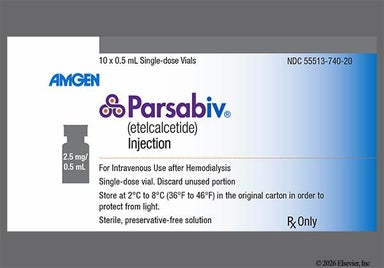
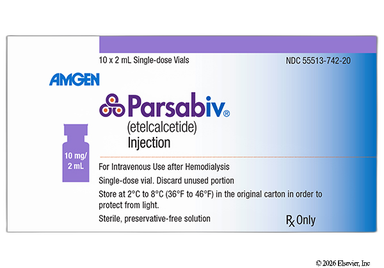
Parsabiv (etelcalcetide) images