


Which Medications Treat Non-Small Cell Lung Cancer?
Several types of medication may be used to treat non-small cell lung cancer (NSCLC). What’s recommended for you depends on the stage of cancer and other factors.
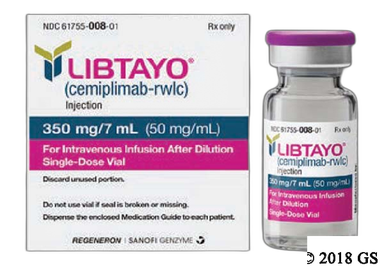
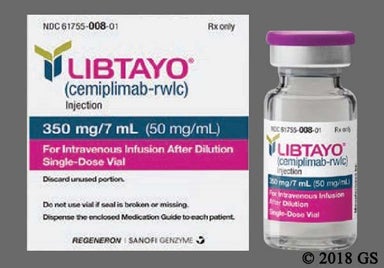
Libtayo (cemiplimab or cemiplimab-rwlc) is an immunotherapy medication that’s used to treat certain types of skin cancer and non-small cell lung cancer (NSCLC). It turns on your immune system to attack and kill cancer cells. But as a result, it can sometimes cause side effects like rash, diarrhea, and lung problems, which might require special treatment with corticosteroids. Libtayo (cemiplimab) is given through the vein (intravenously, IV) at a provider’s office or infusion center once every three weeks.

Certain skin cancers
Certain non-small cell lung cancers that have spread
Our immune system plays an important role in our body, for example, to fight infections. The immune system can also attack and kill cancer cells it recognizes as abnormal. Some cancer cells can hide from the immune system by using the programmed death-1 (PD-1) pathway. When a cancer cell uses the PD-1 pathway, it stops our immune cells from attacking the cancer cell. This allows the cancer to grow.
Libtayo (cemiplimab) is an immunotherapy medication that blocks the PD-1 pathway, or a PD-1 inhibitor. This helps the immune system recognize and attack cancer cells. As a result, the immune system can kill the cancer cells and stop the cancer from growing.
| Common Brands | Libtayo |
|---|---|
| Drug Class | PD-1 inhibitor |
| Controlled Substance Classification | Not a controlled medication |
| Generic Status | No lower-cost generic available |
| Availability | Prescription only |

The following side effects may get better over time as your body gets used to the medication. Let your healthcare provider know immediately if you continue to experience these symptoms or if they worsen over time.
Contact your healthcare provider immediately if you experience any of the following.
Side effects that you should report to your care team as soon as possible:
Side effects that usually do not require medical attention (report these to your care team if they continue or are bothersome):




Libtayo (cemiplimab) can cause some serious health issues. This risk may be even higher for certain groups. If this worries you, talk to your doctor or pharmacist about other options.
Side effects from immunotherapy are typically called immune-related adverse events (irAEs). They happen when the immune system becomes too active and doesn’t just attack cancer cells; it attacks healthy cells, too. These side effects can happen anywhere in your body. They can be mild or very serious. And, they can happen at any time during treatment. Some of these side effects, like changes in lab values that show how well your liver and kidneys are working, might not cause noticeable symptoms. You’ll need blood tests done often so your provider can monitor for those side effects closely. But you might notice certain other immune-related side effects, like diarrhea, skin rash, or shortness of breath. Call your provider right away if you experience any of these symptoms. You might need to pause or stop Libtayo (cemiplimab) and take a corticosteroid depending on how severe your symptoms are.
Rarely, people taking Libtayo (cemiplimab) have experienced severe or life-threatening reactions during their infusion. If you feel itchy or warm, have trouble breathing, feel nauseous, or suddenly have a fast heart rate while receiving Libtayo (cemiplimab), let your nurse know right away. Most of the time, giving the infusion slower can help. But sometimes, having a serious reaction means that you shouldn’t take Libtayo (cemiplimab) again to avoid having another one in the future.
Some people who’ve taken immunotherapy medications like Libtayo (cemiplimab) and who’ve also had a stem cell transplant have experienced serious problems like graft-versus-host-disease. If you’ve taken an immunotherapy medication like Libtayo (cemiplimab) and have also had a stem cell transplant, your provider will follow up with you closely for signs and symptoms of these problems.
Based on animal studies, Libtayo (cemiplimab) might harm an unborn baby or raise the risk for miscarriage (pregnancy loss) when taken during pregnancy. Because of these risks, if you’re a female who can get pregnant, you should use birth control while taking Libtayo (cemiplimab) and for 4 months after the last dose. Let your provider know right away if you become pregnant while taking Libtayo (cemiplimab).

The usual dose is 350 mg injected through the veins (intravenously, IV) once every 3 weeks.


Prescription savings
Stop paying too much for your prescriptions. Compare prices, get pharmacy coupons, and save up to 80%. Find expert answers to your health questions so you can make the best decisions for yourself and your family.
Health conditions
Medications & treatment
Access & affordability
Medication discounts

Immunotherapy medications like Libtayo help our immune system work. The immune system can usually recognize abnormal cells in the body, such as cancer cells. It then attacks and kills these cells to protect the body from harm. Unfortunately, some cancer cells have found ways to hide from the immune system so they can keep growing. Immunotherapy medications such as Libtayo help turn on or activate your immune system to fight and kill cancer cells.
Because immunotherapy like Libtayo works differently than traditional chemotherapy, it usually doesn’t cause the side effects most people expect with cancer treatment, like nausea or hair loss. Side effects from immunotherapy are different and are typically called immune-related adverse events or irAEs. They happen when the immune system becomes too active during treatment and starts to attack healthy cells in addition to cancer cells. This immune reaction is a lot like an autoimmune disease. The most common reactions happen in the gut (i.e., diarrhea), skin (i.e., rash), and lungs (i.e., trouble breathing). Let your provider know if you experience these side effects during treatment with Libtayo so they can help you manage them.
It depends on how severe the immune-related side effect is. If you have symptoms of an immune-related side effect like a new rash, sudden tiredness, diarrhea, or trouble breathing, let your provider know. They’ll need to examine you and determine what the next steps are. Sometimes, these side effects are serious enough that you have to stop Libtayo permanently. Other times, you can pause Libtayo for a few weeks and take a corticosteroid medication, like prednisone or dexamethasone, to calm your immune system down. Once the side effect has gotten better, you might be able to restart Libtayo.
People who take Libtayo by itself, such as for skin cancer, don’t typically lose their hair. But sometimes, like when treating lung cancer, Libtayo can be given along with other chemotherapy medications like carboplatin (Paraplatin) and paclitaxel that do commonly cause hair loss. If you take Libtayo with these medications, you might experience hair loss. Hair usually grows back after you stop treatment.
How long you take Libtayo depends on several factors. This includes what type of cancer you have, how well Libtayo is working to treat your cancer, and if you have any side effects. Your provider will determine how well Libtayo is working for you by examining your scan results and tracking whether your symptoms improve during treatment. If you have side effects from Libtayo, like changes in lab values, skin rash, or diarrhea, whether you’re able to continue the medication or need to stop treatment depends on how severe they are. In general, people taking Libtayo for skin cancer (basal cell or cutaneous squamous cell carcinoma) can take Libtayo for up to two years. But, people taking the medication for lung cancer might take it as long as it’s working and they don’t have any serious side effects. Make sure to follow up with your provider regularly about your progress with Libtayo treatment.
